
AI Summary of Article 239 Valuation of protection
This summary outlines the treatment of transactions involving funded and unfunded credit protection as specified under existing regulatory frameworks. For transactions utilizing funded credit protection, a mismatch in the maturity profile of the exposure and the protection results in non-eligibility of the collateral. Conversely, under the Comprehensive Method, institutions must adjust the value of collateral to reflect maturity mismatches through a defined formula considering volatility and time remaining to maturity.
On the other hand, for unfunded credit protection, the adjusted value also hinges on maturity alignment, necessitating precise calculations to ensure compliance. These adjustments are crucial for accurately representing the risk profile of exposures in accordance with Articles 223 and 238.

Article 239 Valuation of protection
1. For transactions subject to funded credit protection under the Financial Collateral Simple Method, where there is a mismatch between the maturity of the exposure and the maturity of the protection, the collateral does not qualify as eligible funded credit protection.
2. For transactions subject to funded credit protection under the Financial Collateral Comprehensive Method, institutions shall reflect the maturity of the credit protection and of the exposure in the adjusted value of the collateral in accordance with the following formula:
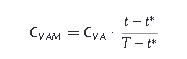
where:
CVA = the volatility adjusted value of the collateral as specified in Article 223(2) or the amount of the exposure, whichever is lower;
t = the number of years remaining to the maturity date of the credit protection calculated in accordance with Article 238, or the value of T, whichever is lower;
T = the number of years remaining to the maturity date of the exposure calculated in accordance with Article 238, or five years, whichever is lower;
t* = 0,25.